Within the scope of railway viaducts there are 4 high speed railway viaducts which with a total length of 6,151 m are the highest in Turkiye
Overview
Project Summary
22 viaducts
Total length of viaducts: 16,181 m
Turkiye's highest railway viaduct
Services
Location
Period
Employer/Client
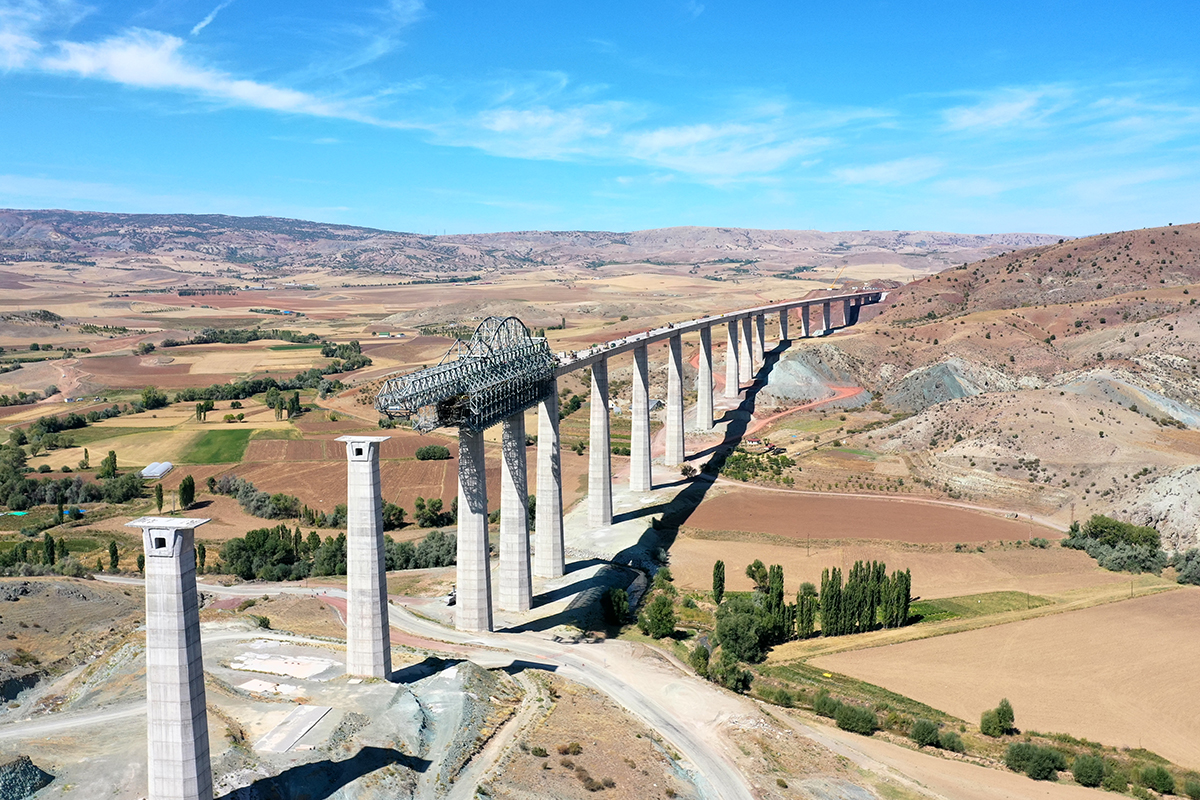
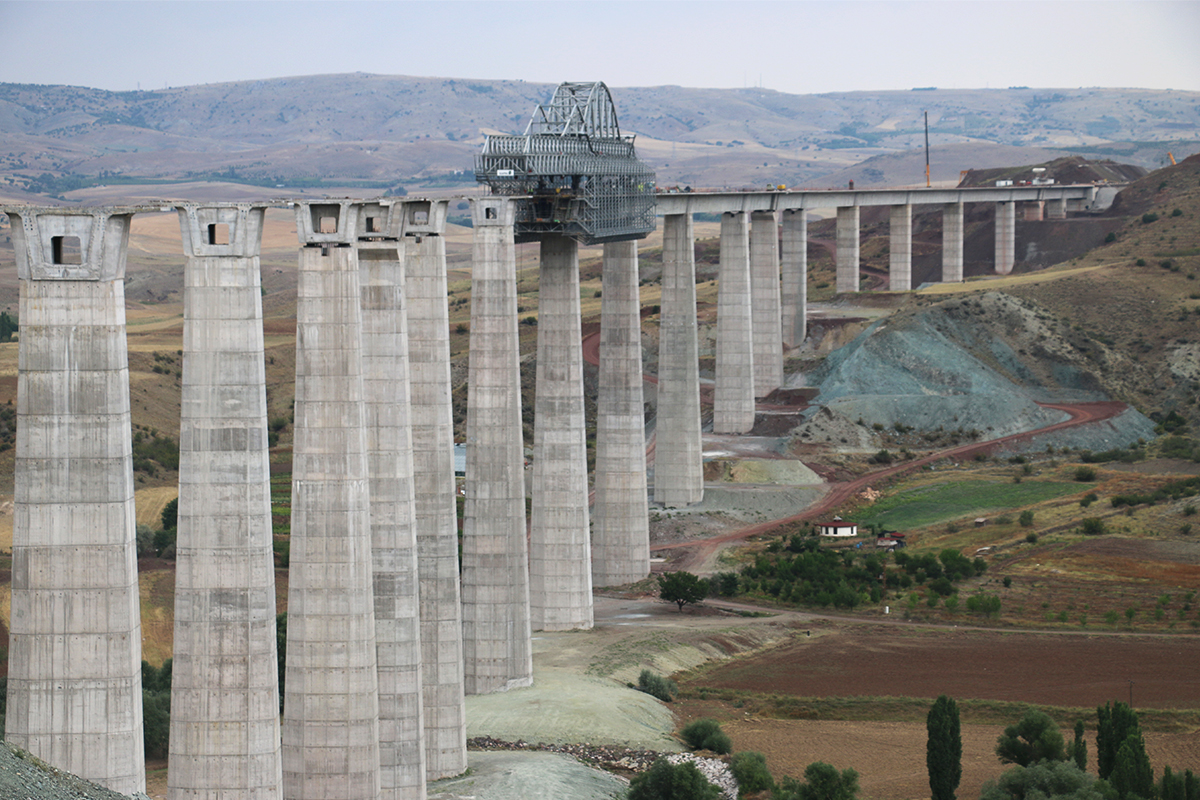
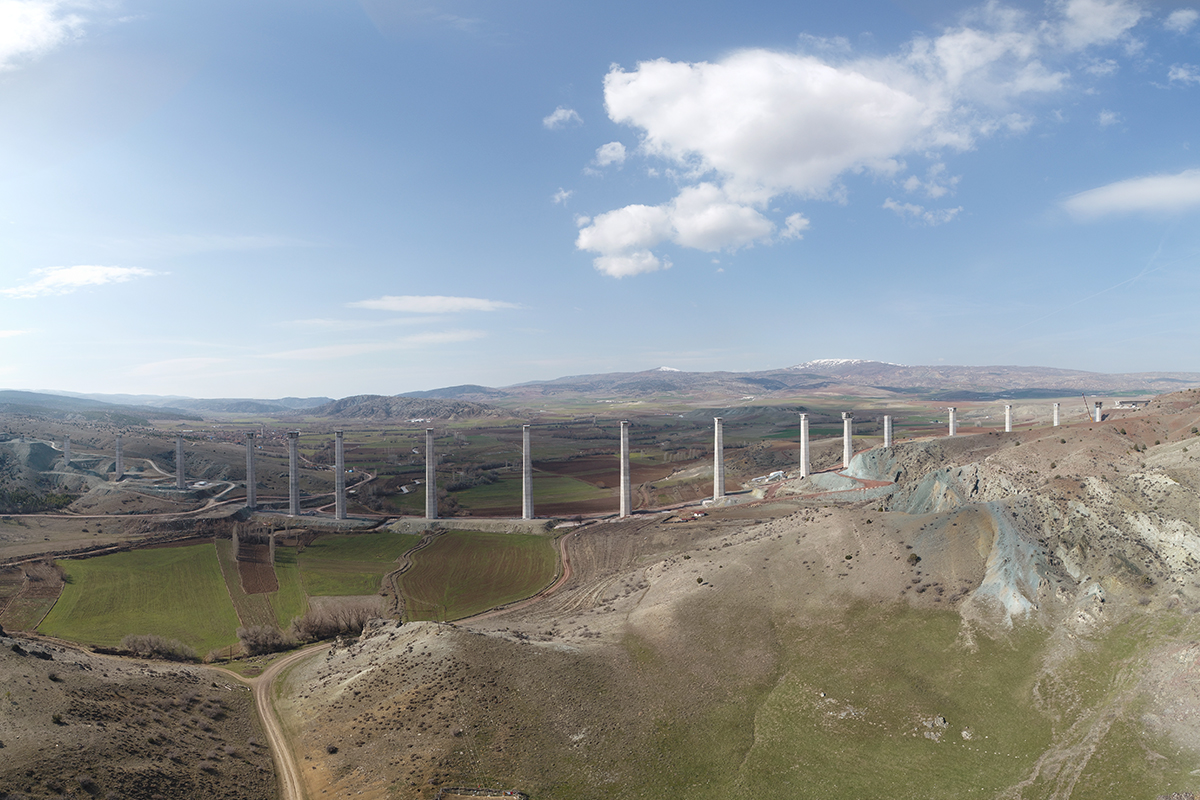
The high speed railway project includes 16 viaducts in the 1. Section and 6 viaducts in the 2. Section. The viaducts are designed with a superstructure of post-tensioned box-section and will be constructed using 2 different construction methods, cast in situ and balanced cantilever. The viaducts between Kayaş-Yerköy are constructed using a traditional formwork system, balanced cantilever method and slip form system.
In many areas of the project alignment the landscape consists of an uneven terrain, therefore viaducts were design with long spans, which resulted in fewer abutments and foundation. Using long spans when crossings of valleys, junctions and highways has brought many advantages.
The seismic system was simplified, the modules were designed with 3 spans. The aim in using the highest span that can economically be achieved, was to save on construction time and cost.
The high speed railway project includes 16 viaducts in the 1. Section and 6 viaducts in the 2. Section. The viaducts are designed with a superstructure of post-tensioned box-section and will be constructed using 2 different construction methods, cast in situ and balanced cantilever. The viaducts between Kayaş-Yerköy are constructed using a traditional formwork system, balanced cantilever method and slip form system.
In many areas of the project alignment the landscape consists of an uneven terrain, therefore viaducts were design with long spans, which resulted in fewer abutments and foundation. Using long spans when crossings of valleys, junctions and highways has brought many advantages.
The seismic system was simplified, the modules were designed with 3 spans. The aim in using the highest span that can economically be achieved, was to save on construction time and cost.